Showing posts with label For the love of bees. Show all posts

Monday, September 2, 2013

garden glimpses


 I was watering my dyeing plants, and admiring this bumblebee, thinking about something I read about bees:

»In many ways the bees renounce love, and thereby this love develops within the entire beehive. You'll begin to understand the life of bees once you're clear about the fact that the bee lives as if it were in an atmosphere pervaded throughly by love ... The bee, with the exception of the queen bee, is a being that would say, if I may put it this way: »As individuals we want to renounce all sexual life, so that we make each one of us into a supporter of the hive's love life«.«
 (Wisdom of the Bees, by Erik Berrevoets)

 ... when my thoughts were interrupted by a sound, which took a few seconds to interpret: the sound of a hen talking to her newly hatched chick. A bit late this hen was, but her labour is so appreciated by everybody in this household. A summer without some sort of new babies, well, it's just not quite right.


The next day there was three ...

And the day after that there was four ...
So much chick love

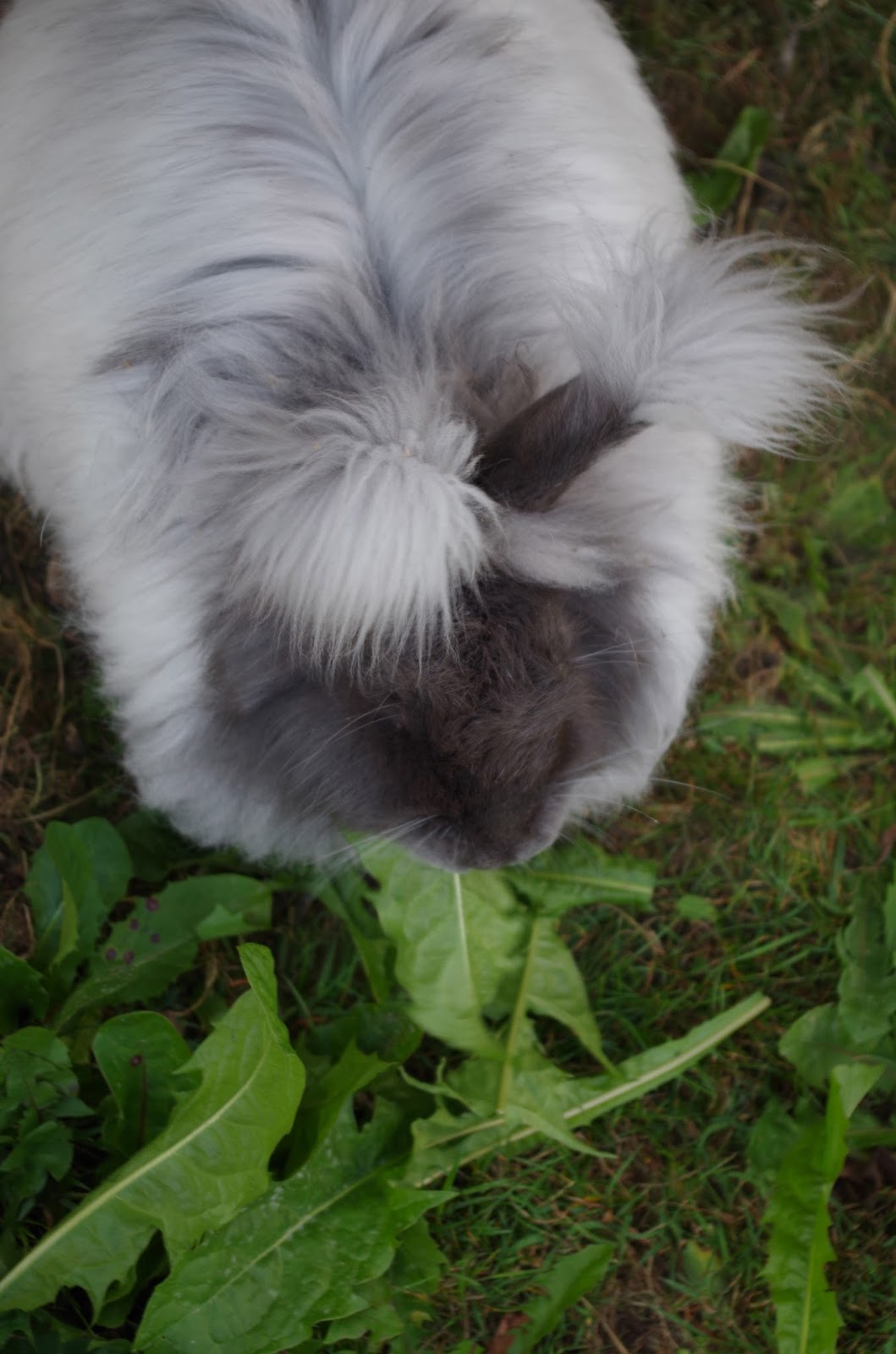
And fluffy bunny love

and generally just love of flowers, fruits, berries 
and abundance in this wonderful late summer's day

Sunday, August 4, 2013

A boy and his Queen

Something akin to a miracle happend right here, in our garden. A queen was born. We were hoping, wishing and longing for it to happen, so little S could have a honeybees of his own. And we tried to do our best to make the adequate preparations. But the miracle, well, we just had to wait and see if it was going to happen. And we waited, and waited, counting days and moons.


Anxiety now gone,  replaced by awe and gratitude for this tiny, beautiful miracle. We painted a little red dot on her back, in order to make it easier to locate her in the hive in future. She didn't seem so pleased with our insolence, but I have a feeling, that the proud and loving look from little S, melted her heart, and made her forgive us.

Before we went to sleep that night, little S told me, he now knew her name. He had been trying to think of a name, but failing. In that instant, he knew he couldn't come up with a name for her, the name just occurred, as if by itself. And the name was Solhjerte (Sun Heart). With a name like that, I believe she'll be the best of queens, radiating and beaming like a little sun, while reigning her hive.


»It is a wholesome and necessary thing for us to turn again to the earth and in the contemplation of her beauties to know of wonder and humility.«
                                       
                                                                  - Rachel Carson

Monday, June 24, 2013

the first honey


It's utterly amazing to have bees in the garden - honey bees - beautiful little creatures, so hard working and dedicated, it's unfanthomable. We were having a quick look in the hive the other day, seeing if everything was fine, and also taking a little bit of their honey.


Little S is a wonderfully attentive observer. He has a good grasp of what he sees, but also has an eye for the details. (Please note, that the next pictures were taken in a few seconds, in order not to disturb too much, and more importantly: not letting the temperature in the hive get too low).
See, how caring a bee is towards another bee, which has just been 'born'. If you enlarge the pictures, you can see the one one to the right is actually licking the other one. Little S spotted them instantly - amongst thousands and thousands of other bees ...

Here you can see a drone being 'born' (guess the right word is 'hatched', but I just like born better). You can see it's a drone (male) because he's bigger than the worker bees, and also the size of his eyes, which are much bigger than the eyes of the females.


Comb with honey. Glorious, golden, beautiful and sweet honey! We cut the comb out of the frame, and laid it in a sieve, so the honey could slowly drip from the comb. This way you don't ruin the honey, and all the incredible healthy stuff, that's in the honey, you get too. Given time, almost all the honey will drip from the comb, and the rest can be extracted by pressing. My husband had the clever idea, to use a potato ricer, and it worked fine. We did eat some of the comb with honey in it first, as candy and chewing gum. First you get this wonderful sweet and spicy mouthfull, and then you chew the beeswax as gum. The propolis in the beeswax makes it the healthiest candy you can get.

Little S made his first batch of crispbread - all on his own! Reading the recipe, measuring; everything. After tasting them, he deemed them suitable for making again, so he found a book to write down the recipe, and thereby started his very own cook book of favourite recipes. That makes a mummy proud!
They are so good, and even better with a dash of honey.


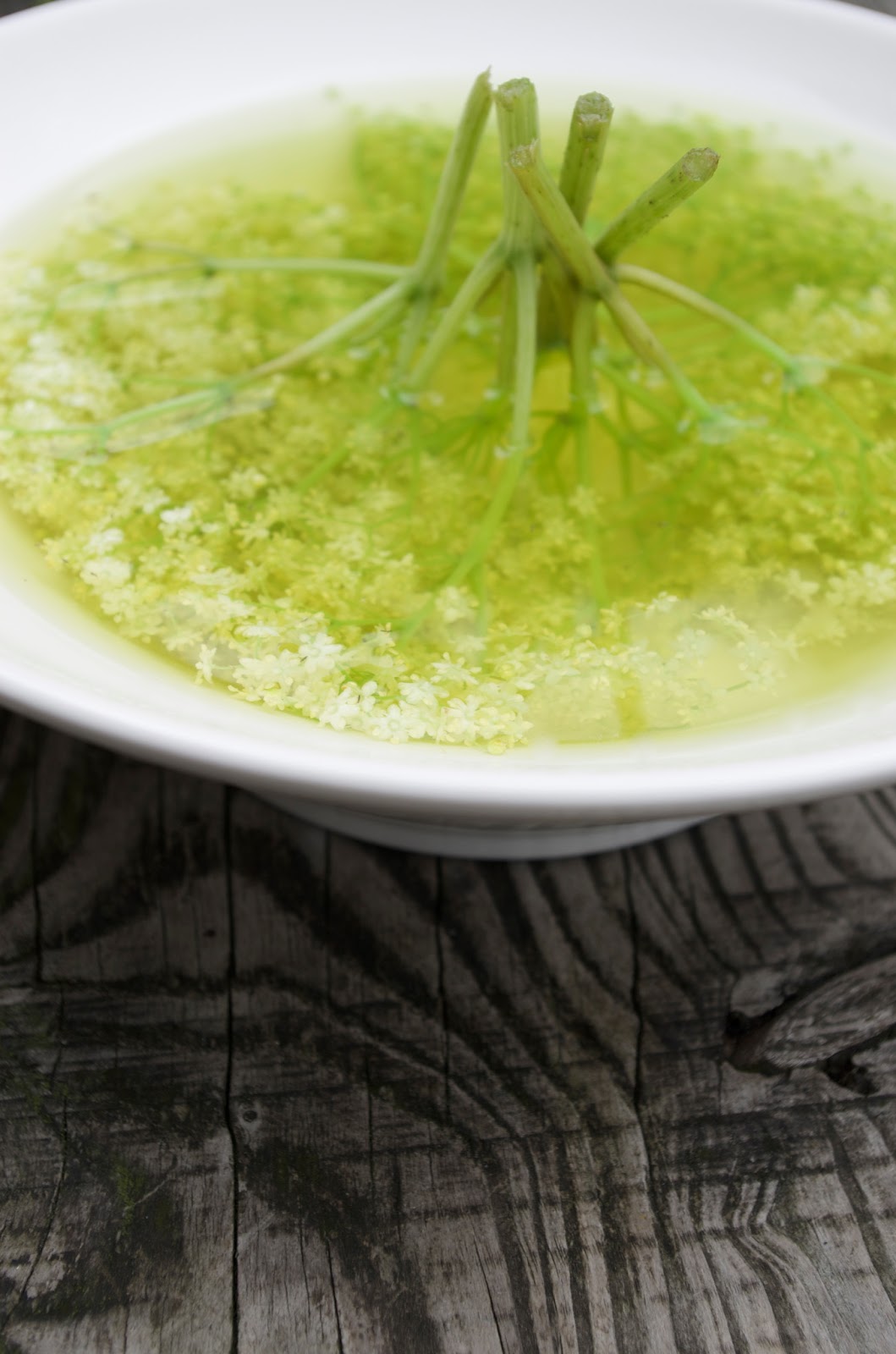
Today we made instant elder flower drinks. Poured boiling water over a handful of flowers. Let it cool. Strain. Add lemon juice and honey, and you have concentrated, liquified summer to delight in.

Update: I forgot, that we use to slice the lemon, and add them to the flowers - before the boiling water is added. It's better that way :)


Wednesday, April 3, 2013

Every little thing wants to be loved

There has hardly been a day, where temperatures reached the point for the bees to be safe outside of their hives. We've visited our bees - still living with our Masters in the Bee Arts - and they're fine, spring cleaning, and waiting for milder weather to come.
We haven't opened the hives to see if the bees are fine, opening the hive would let out the warmth that the bees work so hard to maintain. We have placed a thermometer inside the hive, that can be read from the outside. If it's warm inside, the bees are well and sound. We'll just have to patient and wait with the bees.

As a part of our training in the art of bee keeping, we will learn how to use the honey, bees wax, pollen, propolis, royal jelly and venom in various ways. Being patient about the spring to arrive in full bloom is one thing - being patient about other things (like learning about, say, bees wax) may just be a bit too demanding ... so we have been trying out a few things on our own: calendula healing salve, lip balms with various fragrances, honey lollipops and drops - and lotion bars.

 Sheer goodness! Utmost sumptuousness! Supreme satisfaction!
The beauty of the simplicity; few ingredients are needed - and hopefully some of the ingredients can come from your own garden.The calendula salve is made with an oil infusion of my own calendula flowers.

Calendula Healing Salve


Honey Amber Lollipops

Lip Balm

Lotion Bars

The recipes were found on the internet, tested and altered to our liking. I found The Mountain Rose Blog helpful.
 ..................................................

»...The world was really one bee yard, and the same rules work fine in both places. Don't be afraid, as no life-loving bee wants to sting you. Still, don't be an idiot; wear long sleeves and pants. Don't swat. Don't even think about swatting. If you feel angry, whistle. Anger agitates while whistling melts a bee's temper. Act like you know what you're doing, even if you don't. Above all, send the bees love. Every little thing wants to be loved.«
- Sue Monk Kidd


Thursday, January 10, 2013

Trying something new - and loving it

In july last year, my husband and I established an agreement with an elderly couple, an agreement involving a whole year of learning from them, of being taught in one of the oldest ways of teaching. We became their apprentices in the art of biodynamic beekeeping.
They have introduced us to the amazing, intriguing, and utterly thrilling world of life in a bee hive.


I'm deeply grateful we have been given this opportunity to learn from such experienced and knowing, yet curious and open-minded people. Their enthusiasm and love for the bees are touching, and their knowledge is shared with abundant generousity. They have travelled all over the world, in order to learn more about bees. They've told us, that even though they didn't understand the language spoken in most of the countrys, they always understood other beekeepers. They have learned from munks in England and Polish bee keepers in acacia forests. And now they offer all this knowledge to us. While humbly declaring themselves as merely beginners, after 35+ years.


 The 'us' very soon came to include little S. He's our little 'bug boy', and even though I believed he was too little, our Masters in the Bee Arts welcomed him with open arms. Watching my little boy lifting up a comb barehanded, with unhurried and careful movements. Seeing how he examins the comb with patience and deep interest, before gently sliding it back in the hive. Enjoying the inspiration it gives him: drawing bees; queens, drones and worker bees. Making little books with drawings of hives and bee keepers and writing about it with his sweet big letters and funny spelling. Hearing him say, with warmth and confidence, that 'bees are sweet and harms noone'. Well, that makes my heart swell with love and pride, and confirms that making bees a part of our lives is the right thing to do.
My husband and I now have a hive each, the bees still living with our teachers. Little S shall have the next queen and her family whenever the chance occurs. I wish we could find a swarm and bring home for him - but that is probably too much to hope for.


Our education is involving all aspects of bee keeping. But first and foremost to understand the complexity of colony life, in order to respect its integrity. We learn how letting the bees build natural combs and rejuvenate and reproduce freely, as is their true nature, makes them stronger and healthier.
We also learn, that 'The wisdom of the hive guides its keeper', of which our teachers are living examples. Our little one believes in this so strongly, that when in doubt of this or that, he remarks: 'let's call Eivind and have him ask the bees'.

If you'd like to read more, Bees - an ancient love story, by Michael Thiele, is a beautiful approach to bees.